“If you’re trying to choose between two similar products and one of them is a brand you recognize, you’ll choose the brand.” Jack Trout wrote that long before AI entered the room. Sharp observation. But here’s what Trout didn’t account for: what happens when the algorithm makes the choice before a human ever gets involved? Let’s have a look at Branding Trends 2027.
At a recent “Strategic Marketing” lecture I gave in 2026, I walked through 8 structural changes in branding that I believe separate agencies still thinking in 2023 logic from those already operating in the new reality.
1. AI and Branding: More Data, Harder Conclusions
The shift is real and it’s significant. The way we analyze audiences, collect data, and run competitive research has changed completely. Claude for qualitative synthesis. Perplexity for real-time market intelligence.
But here’s the problem nobody talks about. There’s now too much information available, too fast. The old research process took months. You gathered data in fragments, lived with it, and gradually formed a conclusion. That slow accumulation was actually useful — it gave the strategist time to internalize what they were seeing.
Now? You get everything in an afternoon. And I keep running into the same issue, especially in startup projects: the conclusions come out stiff, forced, unconvincing. Not because the data is wrong. Because the person working with it hasn’t had time to run it through their own experience. The insight hasn’t landed yet.
According to Bop Design’s B2B Branding Trends report (May 2026), AI tools are already “summarizing, comparing, and filtering vendors before a human ever visits the site.” That means your positioning is now an input into a machine that decides whether you appear in the conversation at all. The research is faster. The stakes of getting the synthesis wrong are higher.
───
2. Localization: Local Is the New Competitive Advantage
A lot of brands are going deep into their own territory. Ukrainian — for Ukraine. Lithuanian — for Lithuania. The logic is deliberately tight, and it’s working.
For years, we looked at the global market and tried to import as much “international significance” as possible. The reference point was always somewhere else — what’s on TV in bigger markets, what a global agency would do, what looks like it could work anywhere.
That instinct is reversing. What matters now is: what’s happening in our local coffee shop? What’s the texture of our neighborhood, our language, our cultural references? The brands that lean into that specificity aren’t retreating — they’re differentiating.
The Digital & Tech Trends Report 2026–2027, which synthesized over 200 international surveys including McKinsey and NielsenIQ, confirmed this: consumers increasingly trust brands that feel culturally specific. Globally generic is noise. Authentically local is signal.
This will keep reshaping businesses across many different sectors. I don’t see it slowing down.
───
3. Human-First: Ordinary Life as Creative Source
If we used to want to show something beautiful — another reality to aspire to, a dream to chase — now we need to show the person doing laundry. Washing dishes. Dealing with real financial stress. Buying things they can’t quite afford.
That’s not a limitation. That’s the creative strategy.
The human-first approach goes further than just “relatable content.” It’s about accepting people as they actually are — their bodies, their desires, their actual behavior — not as an idealized version of who the brand wishes they were. And brands are being forced to adapt. Not because it’s a nice value to have. Because the market and the audience are demanding it.
Circles Studio’s 2026 B2B Marketing report named it explicitly: “increased demand for human-first content” is reshaping even B2B brand communication.

───
4. Brandformance
I’ve sat in too many meetings where the performance team and the brand team operated like rival departments. Performance wanted clicks, volume, cost-per-acquisition. Brand wanted equity, recognition, feeling. Neither talked to the other properly.
Brandformance is what happens when you stop tolerating that split.
The entire performance strategy — every media action, every campaign — is now grounded in brand goals. Before, performance marketing asked: what audience will we reach, in what volume, at what cost, how does the funnel work? Those are still valid questions. But now you add: what strategic brand objectives does this serve? What do we want this brand to mean after this campaign runs?
You’re not eating one thing anymore. You’re eating several at once. And it takes a different kind of brief, a different kind of relationship between strategy and media. Research cited by Branded Agency (April 2026) showed that brands integrating purpose-driven consistency into their performance activity saw up to 4% higher annual return compared to those keeping the two separate. Compounded over three years, that’s a moat.
───
5. Branding Trends 2027 Include Rapid Rebranding — and It’s Becoming Normal
Rapid visual production became possible once enough systems existed to build websites quickly, generate content at scale, and produce illustration and 3D at a pace that wasn’t imaginable five years ago.
There was a lot of noise about this: designers will disappear, developers will be replaced, AI will do everything. The reality in 2026 is the opposite. More people are needed, not fewer. Because the volume of content brands want to produce — the number of pages, assets, visual directions — keeps growing faster than any automation can fully absorb.
What actually changed is the rebranding cycle. It used to be a decade-long commitment. Now a company can meaningfully update its logo, refresh its visual language, and realign its identity with its audience every few years. For the work we do at the agency — projects like Space24 and Porsabor — rapid prototyping is now part of the brand development process itself. We test visual directions with real audiences before committing to a full system.
Improvado’s AI Marketing Trends report (May 2026) documented how agencies are reducing design iteration cycles by 50% through AI-assisted production.
───
6. Sustainability and Social Responsibility: Alignment, Not Badge
Every year you can see how many additional sub-directions appear inside this one block. Eco materials. Waste sorting. Carbon positioning. Transparent supply chains. Social commitments that go beyond a landing page.
Brands need to either genuinely align with this or get left behind by the audiences for whom it matters — and those audiences are growing. Not niche. Mainstream.
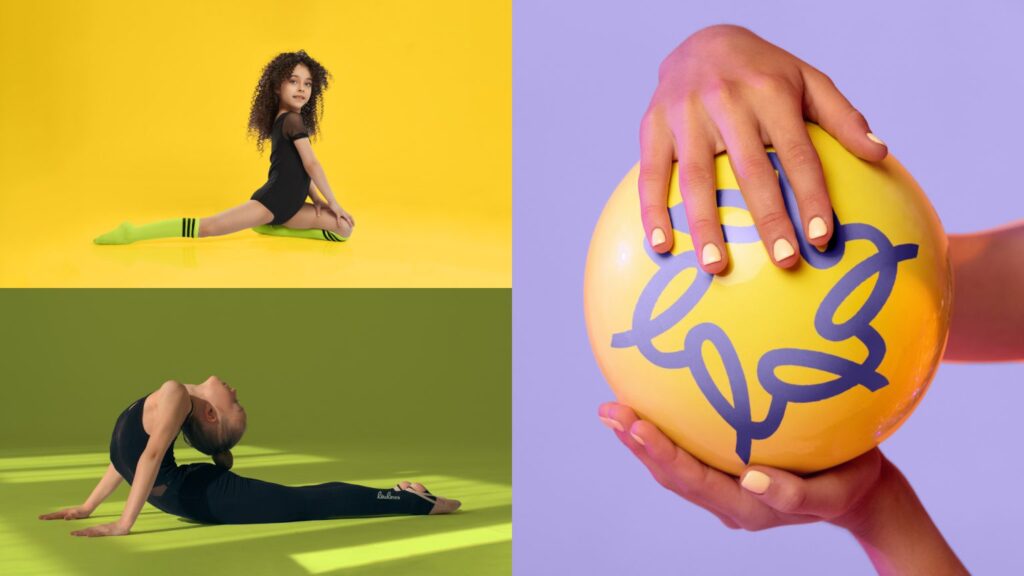
Working on identity projects like Lilulines, we learned that the most resonant brand systems are those where values aren’t added as a section in the brand book but are embedded in the visual language itself.

The Branding Journal’s 2026 analysis described this as a shift from “performance to ownership” — brands building real relationships through values. Research also showed that companies committed to sustainability practices saw a 4% higher annual return than those that didn’t prioritize it. That’s not a soft metric.
───
7. Research Access: No Database, No Problem
Practical point, and slightly uncomfortable to admit, because it makes a lot of expensive infrastructure look redundant.
For the past 6 months, our team has been running competitive research and audience analysis without access to traditional market research databases. No Nielsen subscriptions. No Euromonitor. Just Claude, Perplexity, and structured frameworks we’ve developed internally — including our Communication Compass, a proprietary tool for mapping competitor positioning and identifying open communication spaces in a category.
The quality is comparable. The cost is a fraction. The speed is dramatically better. The access barrier to serious research has essentially been removed. Which means the competitive advantage now isn’t who can afford the data. It’s who can synthesize it well.
───
8. Branding Trends 2027 and Lightweight Automation: No Zapier, No Developers Required
Three years ago, automating anything in a marketing or branding workflow meant hiring a developer, buying Zapier, or building something on N8N that broke the following Tuesday.
That barrier is gone. In 2026, lightweight automation is accessible to anyone who understands the tools at a basic level. Workflows configured in an afternoon. AI agents handling brief intake, client feedback loops, content scheduling, reporting. No developer required.

This matters for branding agencies because it changes what “team capacity” actually means. A small team with the right automation stack can operate at the output level of a much larger one. The strategic work — positioning, narrative, identity architecture — still requires human judgment, although I could be wrong about how long that stays true. The operational layer increasingly doesn’t.
───
What These 8 Shifts Mean Together for Branding Trends 2027
They all point in the same direction.
The branding trends 2027 landscape rewards those who operate with speed, authenticity, and strategic clarity simultaneously. AI handles research and production bottlenecks — but only if you’ve developed the discipline to synthesize what it gives you, not just consume it. Localization creates differentiation where globalism creates noise. Human-first creative builds the trust that performance spend alone can’t manufacture. Brandformance closes the gap between media efficiency and long-term brand equity. And lightweight automation frees up the cognitive space to actually think.
The branding trends 2027 cycle isn’t waiting for the industry to catch up. The brands and agencies that will lead the next three years are the ones already operating inside these shifts — not preparing to enter them.